
Customer-first: shipping user feedback
 Emma BurrowsMarch 20, 20265 min read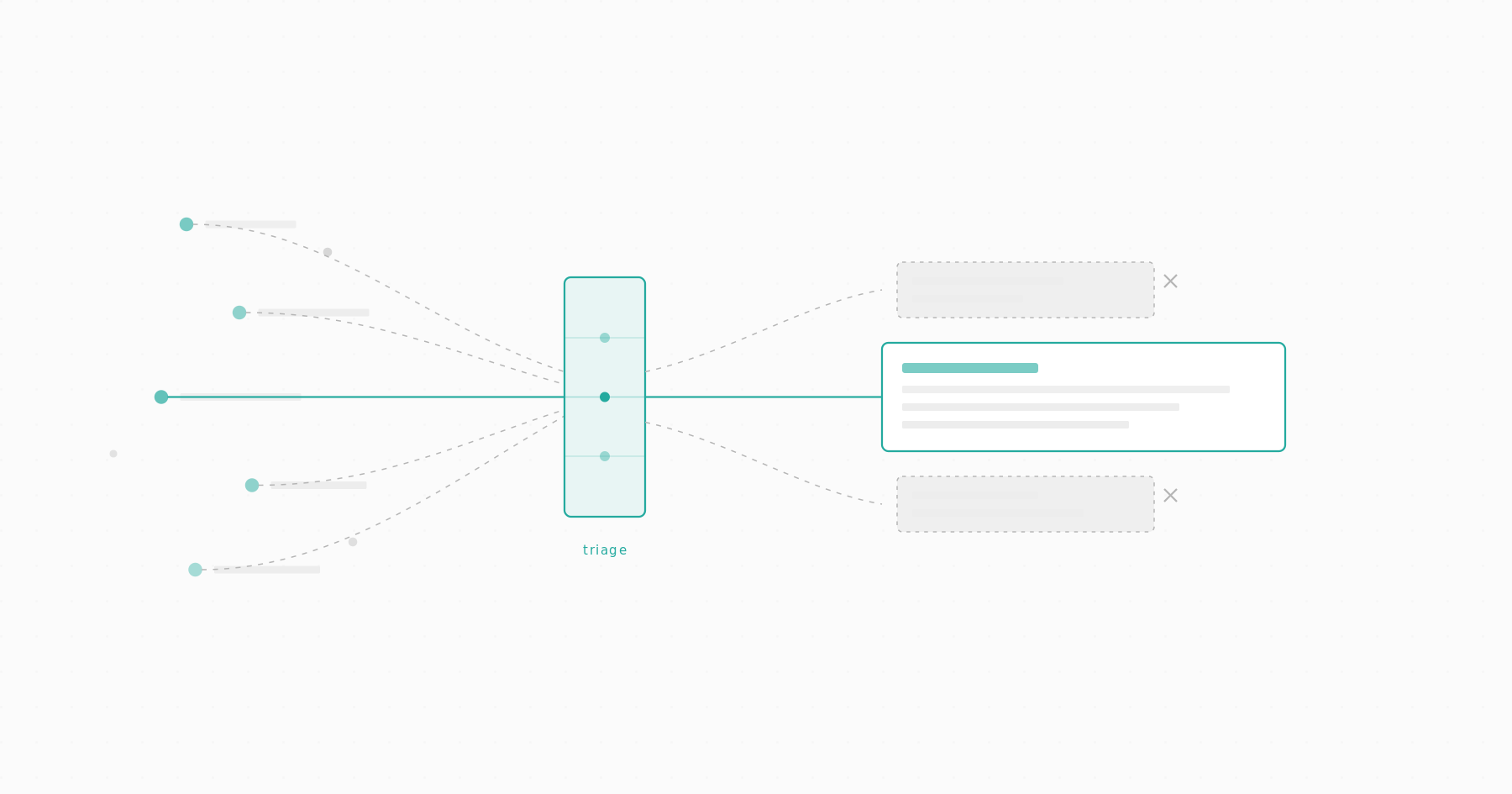
Customer-first product development is one of the oldest principles in product management: stay close to your users, build what they ask for, iterate based on their response. In the right conditions it produces products people genuinely love.
It's also one of the easiest methodologies to apply incorrectly — and AI has made that easier.
This guide covers what customer-first development actually involves, where it works, where it produces the wrong outcomes, and how teams are adapting it for build environments where shipping has become very fast.
What is customer-first product development?
Customer-first development (sometimes called customer-driven development) is a methodology where product decisions are primarily driven by direct user feedback. Rather than building from internal product vision or top-down roadmap planning, customer-first teams treat user requests, support tickets, interview findings, and usage data as the primary input to their backlog.
In its strongest form, no feature gets built without a customer conversation behind it. In its more common form, it's a philosophy of default — teams bias toward customer input when priorities are unclear and use regular feedback as a check on their own assumptions.
The customer-first workflow
The workflow runs: collect feedback, triage it, prioritize it against the roadmap, build, validate, repeat.
-
Feedback collection runs continuously. Teams maintain channels for gathering user input — support tickets, scheduled interviews, in-app feedback forms, sales call notes — and review them regularly.
-
Feedback gets grouped by theme. One customer asking for something is a signal. Ten customers independently asking for variations of the same thing is a priority.
-
Customer-sourced requests get weighed against the roadmap. Not everything gets built, but the backlog is heavily shaped by what users are asking for, balanced against technical constraints and product strategy.
-
Features ship to the users who requested them first. Their response is the primary signal of whether the solution is right.
-
The cycle repeats. Customer response to a shipped feature generates new feedback, which enters the next triage round.
What's critical to get right
The data flow between user feedback and your coding agent needs to be seamless — and it needs to carry the right context. This is the part teams most often underestimate.
We ran into this ourselves at Rezonant. A customer came to us and said they wanted the tasks our product generates to be more technical. Someone on the team took that feedback, dropped it into a coding agent, and built a feature to do exactly that. Reasonable response. Except we also had customers who thought the tasks were already too technical. The feature that solved one customer's problem made the product worse for another.
When a customer request goes directly to a coding agent without proper context, you risk shipping the wrong thing — even when the request itself is genuine. The agent builds to the letter of the request, not the intent behind it, and it has no way of knowing what other customers need. That judgment has to happen before the build, not after.
What this means in practice: there has to be a layer between raw feedback and execution where a human reviews the request, adds context, and decides whether it's actually the right thing to build. That review step becomes critical. It's also, realistically, where the bottleneck will sit.
Pros and cons
Summary of key advantages and disadvantages of customer-first development.
Pros
-
Customer-centric products. The most obvious benefit is putting the customer first. Every feature in the backlog is supported by traceable demand — it's not based on an internal guess about what users want, but on an actual user request. When this is done consistently, you end up with products that solve confirmed, real-world problems instead of just hypothetical ones.
-
Aligned objectives. Customer-first development also creates a strong alignment between commercial goals and technical work. When the sales team brings a customer request to the table, and that request directly leads to a new feature, the friction between what the business needs and what the technical team builds is significantly reduced. This kind of alignment is difficult to achieve otherwise.
-
Team calibration. Finally, maintaining regular contact with customers keeps the development team grounded. Assumptions are tested against reality early, before they can grow into bigger issues, and problems are surfaced much faster.
Cons
-
You can only solve for the users you already have. Customer-first development can only solve for the users you already have. Your existing customers will not be able to tell you what would attract users you haven't acquired yet. Teams that rely on it too heavily end up optimizing for their existing base rather than expanding to new ones.
-
Product coherence suffers. Controlling product taste and coherence is the other persistent challenge. When every customer request gets built, the product becomes a collection of individually reasonable features with no coherent architecture. Users feel the incoherence even when they can't name it — navigation gets confusing, the interface feels cluttered, and the product as a whole doesn't quite work, even though each individual piece satisfies someone.
-
The review step becomes a bottleneck. Speed vs. control is the hardest operational trade-off. You do need some form of human review, at minimum to pass or reject incoming requests — some of them will just be wrong, duplicated, or misaligned with where the product is going. But that review step becomes the process bottleneck. How much human judgment you put in the loop is a real decision, not just an implementation detail.
When customer-first development fits
Good fit:
- Early-stage products where internal product intuition is limited
- Teams with strong feedback infrastructure and disciplined triage
- Products in established categories where user needs are fairly consistent
- Features where user preference is genuinely the right input
Poor fit:
- Teams without a product thesis (customer-first without strategic direction produces drift)
- AI-accelerated build environments where shipping velocity is high and the review step gets skipped
- Products serving multiple distinct user segments with conflicting needs
Five questions to ask before building a customer request
Every piece of customer feedback should pass through structured triage before it enters the product roadmap and backlog.
Striking a good balance between incorporating customer feedback and delivering on product strategy is the true craft part of the product management role, and there is no way to automate it.
However, here is a useful (although not exhaustive!) list of questions to ask yourself before shipping a feature requested by a customer:
A triage checklist for evaluating customer-requested features.
Remember: the best customer-first teams are responsive to customer problems without being reactive to customer requests. There's a difference — the former requires judgment, the latter skips it.
How Rezonant supports customer-first workflows
Rezonant's Chrome extension turns your web app into a collaboration canvas for product feedback. As you review your product, you can flag issues, capture requests, and annotate features directly in context, without switching to a separate tool.
Feedback collected this way lands in Rezonant, where you can review it, cluster it, and either reject it or route it forward. You can consolidate related requests into a single action, pass approved feedback straight to a coding agent with the right context attached, or use it to inform the next PRD your team writes.
The critical part — the context layer between raw feedback and execution — is what Rezonant is built to support. The agent doesn't get the customer's raw message. It gets a structured brief that includes the request, the context behind it, and the constraints it needs to respect.